Wednesday, June 27, 2012

4th of July Pancakes and Parade


Please join us to celebrate the
of July!


We will be having a Ward Breakfast.  

ALL YOU CAN EAT PANCAKES!

Please bring your favorite pancake topping to share.  We will begin at 8:30 am at the church on Wednesday, July 4th.  Please decorate your bicycle, wagon or other ride and join our parade. 


This is for everyone!
There is no age limit.

Monday, June 18, 2012

Sprouting & Gardening Enrichment Meeting

Ok, so you missed it.  Well Brandy and Sena taught us how to plant a garden in small spaces, starting from seeds.  Brandy had many great and creative ideas as to how and where you can plant your garden and/or specific plants.  Sena had a groovy class on sprouting and told us of the nutritional value from eating sprouts.  It really made me want to eat the sprouts.  Sister Baggett has been very busy making patch work pot holders and she gave all the sisters in attendance a cute handmade pot holder.  Then after the class presentations, we got to try Brandy's delicious Zucchini pie (yes, it was very good) and Sena's homemade salsa.  What a delicious treat! A big THANK YOU to everyone who participated!


Ruby's Shower

Well, sorry I am so late posting these great Pictures from Ruby's Shower.  We had a great time!  Thank you to Sister Abell, Sister Tuft and everyone else that participated!


Preparedness Week 18

Boo Hoo, this is our last week of the Ten Principles of Preparedness by Kellene Bishop.  Her website is www.preparednesspro.com

Ten Principles of Preparedness- Part 10 Communication Preparedness

In the second season of one of my favorite television shows, “Jericho”, there was a perfect illustration of what can happen if reliable communication does not exist (I recommend you renting this two-season series or at least catching some of it on hulu.com). While communication is the last aspect of the Principles of Preparedness, this doesn’t mean it’s insignificant in any way. In fact, there’s a lot of danger, panic, relying on misinformation and chaos that can arise, all from the lack of communication.

When the earthquake occurred in Haiti, the first thing that concerned anyone who knew anyone in that area was “were they alright?” So much so that working phone lines were maxed out for as many as 5 days after the event. This made for difficult circumstances not just for family and friends trying to check on their loved ones, but also hindered the coordination efforts for relief and recovery. Having the foresight to ensure quality Communication Preparedness now while there’s so many options will certainly allay a whole lot of heartache and stress later. I can think of very few times that were less stressful than when my husband was traveling abroad and I had no way of getting a hold of him for 36 hours. So, what should we do to prepare in this regard? There are actually a lot of considerations that we can tackle one at a time.
For starters, let’s presume that even in the midst of a act of Mother Nature, standard phone lines will still be viable. I, for one, have a single dedicated land-line, and I highly recommend that everyone else does as well—with a NON cordless phone attached to it. Electricity may be interrupted, but a traditional telephone line is still viable in some of the most catastrophic of circumstances. You can easily get a land line with no frills such as call-waiting, caller-ID, etc. for as low as $10 a month. I’d call that a worthwhile substitution for a single trip through a drive-thru. Best part is, the ringer is off and I never have to worry about answering an incoming call. It exists for one reason and one reason only; and that is for emergencies. This is smart for so many reasons aside from the wrath of Mother Nature such as an ill-timed home invasion when you’re cell phone has run out of battery strength, cellular interference, electrical interruption, etc. One other thing I would recommend is that you ensure your family members also have a dedicated land-line and I would certainly provide those you care about with your “just in case” phone number.

Another thing you may want to consider is Skype. When cell phone towers are down, Skype can still be operational, even via your cellular telephone. You can actually get Skype FREE for all Skype to Skype calls. Otherwise, plans begin as low as 9 cents a minute. Again, spread the knowledge of this type of option to your family members. Communication is obviously useless if no one that you care about and want to check on has access to communication means.
Next is the use of amateur band radios. It’s interesting to note that a respectable crisis which would be severe enough to interrupt traditional communication is more likely to create a dearth of operational knowledge of HAM radios as opposed to just a shortage of the necessary equipment. So if you’re on a restrictive budget, I recommend prioritizing getting the knowledge and education FIRST on how to operate a HAM radio and then when circumstances permit, invest in the equipment for greater independence. I also recommend investing in long-range walkie-talkies. I’ve found several brands that will work as far apart as 3-5 miles—easily sufficient for recreational communication and invaluable in a time of crisis.

Learning Morse Code, mirror signaling, etc. isn’t just for those ambitious young Boy Scouts. I personally believe it has a lot of merit today for those “just in case” scenarios. Remember during the recovery efforts in Haiti, one of the survivors was found primarily because of their ability to at least signal “S.O.S.?” I asked a classroom of 10 years olds the other day what Morse Code was and NONE of them knew! I think that Morse Code also has its place for encrypted communication—as there are very few persons who have a working knowledge of it today. (Fortunately, most official rescue workers are trained in Morse Code though.)
Along the lines of concealed communication I highly recommend that a truly prepared person learn shorthand writing, American Sign Language, and a foreign language as well. Yes, in a perfectly prepared world I do recommend learning ALL three (I’m still working on the sign language). In terms of which foreign language to master, I specifically recommend learning Spanish, Chinese, and/or Russian. I personally believe that a working knowledge of these languages may be lifesaving some time in the future. Having books on hand which provide resource information on these languages/communication methods is also recommended. Let’s say that your family is knowledgeable with sign language, but as the persons in your home may increase due to catastrophic circumstances, you may find it important that they, too are educated in your preferred alternative communications.

By all means DO stock up on traditional communication tools such as writing instruments and paper. When the “back to school” sales take place each year, inevitably I end up getting a whole lot of paper, pens, and pencils for no out of pocket costs—thank you, coupons! These items go into their respective four-gallon square buckets ready for a “just in case” scenario. I also can’t help but think how valuable such items will be in an environment in which traditional communication is hampered or eliminated—not just for their communication uses but also for education purposes in an electricity-free society. Any by the way, be sure to remember a pencil sharpener. Yes, you could use a knife in a pinch, but since pencil sharpeners are sooo stinking affordable, why not make things easy on yourself and have one on hand? Having some small chalkboards and chalk may also come in handy too.
Oh, did I mention that I was able to buy a bunch of “invisible ink” pens from a dollar store several years ago. I have no idea how long they will last, but the thought that I might be able to use something like that is fun for me. I could write another article just on “secret communications” but I’m afraid that unless you could actually hear my tone of voice, you’d think I was a nut job. *grin*
Finally, I think a lot of folks overlook the fact that good physical strength may be necessary for effective communication as well. A hundred years ago paper and pencil weren’t as critical as a good horse, but that may very well change if we encounter a serious communication interruption in this century. Getting critical information to key individuals may be a matter of having the legs and appropriate equipment to hoof it from one location to another. In light of this communication aspect, I strongly recommend that you make plans NOW as to how you will initially communicate with the individuals in your life that you care about and/or plan to connect with in the event of a crisis.

Thursday, June 14, 2012

Preparedness Week 17

Can you believe it?  We only have one week left to receive the Ten Principles of Preparedness from Kellene Bishop at www.preparenesspro.com


Ten Principles of Preparedness–Part 9

As one really delves into the 10 Principles of Preparedness, it will become apparent that regardless of the need for prioritization of the various principles they are all inseparable and necessarily make an impact on each other. For example, Mental Preparednesshas an impact on all of the others where skill and experience is necessary; Fuel Preparedness is nearly useless if a competence in using the various fuels is absent. Proper Food Preparedness will help to strengthen Medical Preparedness by nature of the quality of foods we consume. As such, when it comes to focusing on FinancialPreparedness, a great deal of the heavy lifting of this Principle is actually accomplished simply by implementing the previous Principles.

For example, Food Preparedness isn’t just about preparing for a time when food may become more scarce, but most importantly it has a great deal to do with stabilizing our food budgets. What you are able to purchase today at a great price is still that great price 5 years from now, thus counteracting the negative impact of a cyclical economic culture. This strengthens Financial Preparedness. Learning and applying alternative medical in our life minimizes our exposure to skyrocketing medical care costs, health insurance rates, and the heavy burden of pharmaceuticals. In fact, medical expenses are the number one reason for bankruptcy filings. Clearly if one can get a better grasp on their health, it will have a positive impact on their Financial Preparedness principle. These are the more simpler aspects of this principle though. Other components of Financial Preparedness tend to be much bigger mountains to climb.
First of all, eliminate all debt, even that of a mortgage. In a world that actually penalizes a person for not having taken on “enough debt” by way of a low credit score, such fiscal discipline may seem quite peculiar to most persons. Some may even feel so strongly about the necessity and virtues in their incursion of debt that they may feel compelled to write hateful and vitriolic messages to me every time I take such a stand. But the indisputable facts are that debt is voluntary enslavement and no mountain of social acceptance and encouragement will change that. Ironically, it wasn’t too long ago that the economy of human slave trafficking was considered to be a political sacred cow in this nation, not to be messed with even in the name of honor; yet somehow we found our way through to where we are today—with the proper belief that enslavement of any kind is wrong and clearly not how mankind was intended to live. Some fiercely believe the notion that their debt is actually a wise financial strategy thanks to the “tax write-offs” which come as a result, when in fact such write-offs are simply paid for through the work efforts of our fellowmen. Oh, Fiddle-sticks! One way or another debt enslaves us and thus is contrary to the honorable state of men made up of independence and self-reliance.
Continuing on with the aspect of owing a debt, some believe that having debt is the best way to enter into an economic collapse believing that if such a collapse were to occur that the requirement for the payment of all debts would cease. Such a belief does not take into consideration the acts of desperate men, men who are accustomed to having great power and influence in the world around them, not being victims and subject to the laws of reality. It doesn’t require much of an imagination to appreciate that under such desperate circumstances, large corporations will find other ways to squeeze payment from their signatories, even if it’s through the aid of our very own neighbors who might easily be persuaded by these desperate corporations to conduct themselves in a dishonorable manner in hopes that their own desperate plight might be abated in exchange for such work. Desperate people do desperate things and as such we have no reason to believe that any crisis event short of the Lord’s Second Coming would do anything to absolve us of our debts. My mom always said to me, “if you never find yourself at a bar, then you’re never likely to find yourself in a bar brawl.” I have applied this wisdom to other areas of my life, including in this aspect of Financial Preparedness. “If I don’t owe money to any man, then I’m not likely to find myself subjected to the desperate acts of men to extract that money from me.”
Financial independence rarely requires a financial windfall for success, rather we can find freedom simply through the modification of our spending habits. Such discipline adjustments can make a much more significant impact on the strengthening of our financial state than any potential lottery winnings. For example, if an average family of four were to reduce their restaurant eating to just once a month rather than the average of 3-5 times per week, they would save the cost of over 827 quality, delicious, and nutritious meals each year—3,956 servings if a focused couponing strategy is made a part of the weekly grocery shopping. By creating weekly menus based on what we already have on hand and restricting our grocery purchases to sale items only, we can literally fill our shelves 10 times faster on the same, if not reduced grocery budget. If we convince ourselves that we don’t have to see a particular movie the moment it’s released in the theaters, and instead wait until such entertainment costs us a single dollar, then we can save an additional $300 per year. If we learned how to preserve food properly in our freezers, refrigerators and on our shelves, each home in American would save approximately $575 per year by eliminating the average amount of wasted food. Likewise we can all give ourselves a substantial raise simply by working part-time hours in an at-home business and generate an additional income of at least $10,800 per year on average. Focusing on wellness and prevention medicine will save the average family a minimum of $2,300 in out-of-pocket medical costs, co-pays, and insurance premium hikes. Grooming our own dogs will save $780 a year on average and planting our own vegetable garden saves the average family over $1,440 per year, not counting the peace of mind we reap in knowing what’s in our food and the increased amount of vegetables and fruit which will be consumed due to it being more readily available. Between gardening, grooming, cooking, preserving, couponing, and working an at home business, an average of only 18 hours a week can generate a combined income and savings of $18,014.40 per year which translates into a rate of $19.24 per hour. Unfortunately, most of us don’t value our time and talents anywhere near that much. Imagine what can happen to our financial strength if we eliminate the constant presence of interest-bearing debts on top of this savings?
Another aspect of Financial Preparedness is being ready for any possible “hiccup” in your flow of income and your ability to access and use it to obtain the items you need. One of my hard and fast rules is that I do not keep any more money in the bank than what I need to cover the payment of utilities and any other obligations. Otherwise I use cash, not checks, just cash. If I need to send a check or a money order and using my debit card is not an option, I will take advantage of my banks “Pay Your Bills Online” option or purchase a money order. I also suggest that everyone have at least 90 day’s worth of expenses set aside in savings and whenever permissible, and pay utilities such as electric, sewer, property taxes, and water bills one year in advance. Yes, these costs are likely to change along the way; but I’d rather deal with a small change in the event of a financial collapse or job loss rather than having those additional expenses on my head. Also, I’d rather make use of the questionable currency we have at present as much as possible before its value becomes seriously compromised. I also recommend that $500 for each person in your family is set aside in small bills (no bigger than a $10 bill) and kept in a safe place outside of the banks for true emergencies.
Rather than allowing persons of unearned trust handle my money and my future, I prefer to invest in commodities myself which I know are essential now and will be essential in the future regardless of what happens on Wall Street. This involves having all of the tangible items necessary in each of the Ten Principles of Preparedness, taking care to be sure that I have enough and to spare so that with these items I might be able to purchase other items which I may need later, via bartering transactions. If I am fortunate enough to have all of those types of needs taken care of then my next step would be to invest in land, paid for free and clear, so that I can use such an asset to farm produce and raise cattle—because I’m quite certain there will never come a day on this earth in which we don’t need food. After all that, then, and only then, would I invest in precious metals at this present time.
Financial Preparedness is about what every other Principle of Preparedness is about—independence from vulnerabilities. An honest assessment of what your financial vulnerabilities are at present will most certainly lead you to the proper path of Financial Preparedness for your personal needs and wants.

Friday, June 1, 2012


Welcome to Relief Society

Monroe Ward                                                    June 2012

"Worthiness to hold a temple recommend gives us the strength to keep our temple covenants. How do we personally gain that strength? We strive to obtain a testimony of Heavenly Father, Jesus Christ, the Holy Ghost, the reality of the Atonement, and the truthfulness of the Prophet Joseph Smith and the Restoration. We sustain our leaders, treat our families with kindness, stand as a witness of the Lord’s true Church, attend our Church meetings, honor our covenants, fulfill parental obligations, and live a virtuous life. You may say that sounds like just being a faithful Latter-day Saint! You are right. The standard for temple recommend holders is not too high for us to achieve. It is simply to faithfully live the gospel and follow the prophets." Elder Robert D. Hales

Up Coming Events
 10 -  Pot Luck
11-14 Young Women’s Camp
17 – Father’s Day

June Lesson Schedule
 3 – Relief Society Presidency
10 – “Revelation from God to His Children” P.111-122
17 – “An Enthusiastic Desire to Share the Gospel” P. 123 -134
24 - “How to Obtain Inspiration and Revelation for your Personal Life”

June Birthdays
1   - Beck McCready
11 - Dayna Burgos
14 - Krystin Harper Myles
14 - Sena Clark
19 - Norma Wicklund
20 - Rhonda Carpenter
27 - Sandee Clawson
29 - Rhonda Johnson
 
Happy Birthday Sisters!
"Relief Society stands for love. What a remarkable thing it is to witness the love of good women one for another. They mingle together in the bonds of love with friendship and respect for each other. This organization is actually the only resource that many women have for friendly association.
"It is the natural instinct of women to reach out in love to those in distress and need."
 
"When compared to eternal verities, most of the questions and concerns of daily living are really rather trivial. What should we have for dinner? What color should we paint the living room? Should we sign Johnny up for soccer? These questions and countless others like them lose their significance when times of crisis arise, when loved ones are hurt or injured, when sickness enters the house of good health, when life’s candle dims and darkness threatens. Our thoughts become focused, and we are easily able to determine what is really important and what is merely trivial."
—President Thomas S. Monson, "The Race of Life", General Conference, Apr. 2012

Thursday, May 31, 2012

Preparedness Week 16

Well, we only have three week left in Kellene Bishop's Ten Principles of Preparedness.  Again, her complete website can be found at www.preparednesspro.com
Ten Principles of Preparedness Part 8
“Food. It’s what’s for dinner.”

“Home is Where My Food Storage is.”
“Hunger is the best sauce.”

Yup, it’s time for us to address the Principle of Preparedness that so many think of first and foremost—food. Keep in mind, though that it is indeed the 8th Principle of Preparedness in order of prioritization. All of the other Principles I’ve addressed leading up to this one will indeed demand positions of greater prominence before you get to this one. As I always say, I strongly doubt that a person who’s just been hit in a car accident makes their first phone call to Dominoes Pizza. Nope. Regardless, it is a critical Principle of Preparedness. So let’s do it right, shall we?
The various aspects of this principle are Acquisition, Nutrition, Shelf-life, and Preparation.
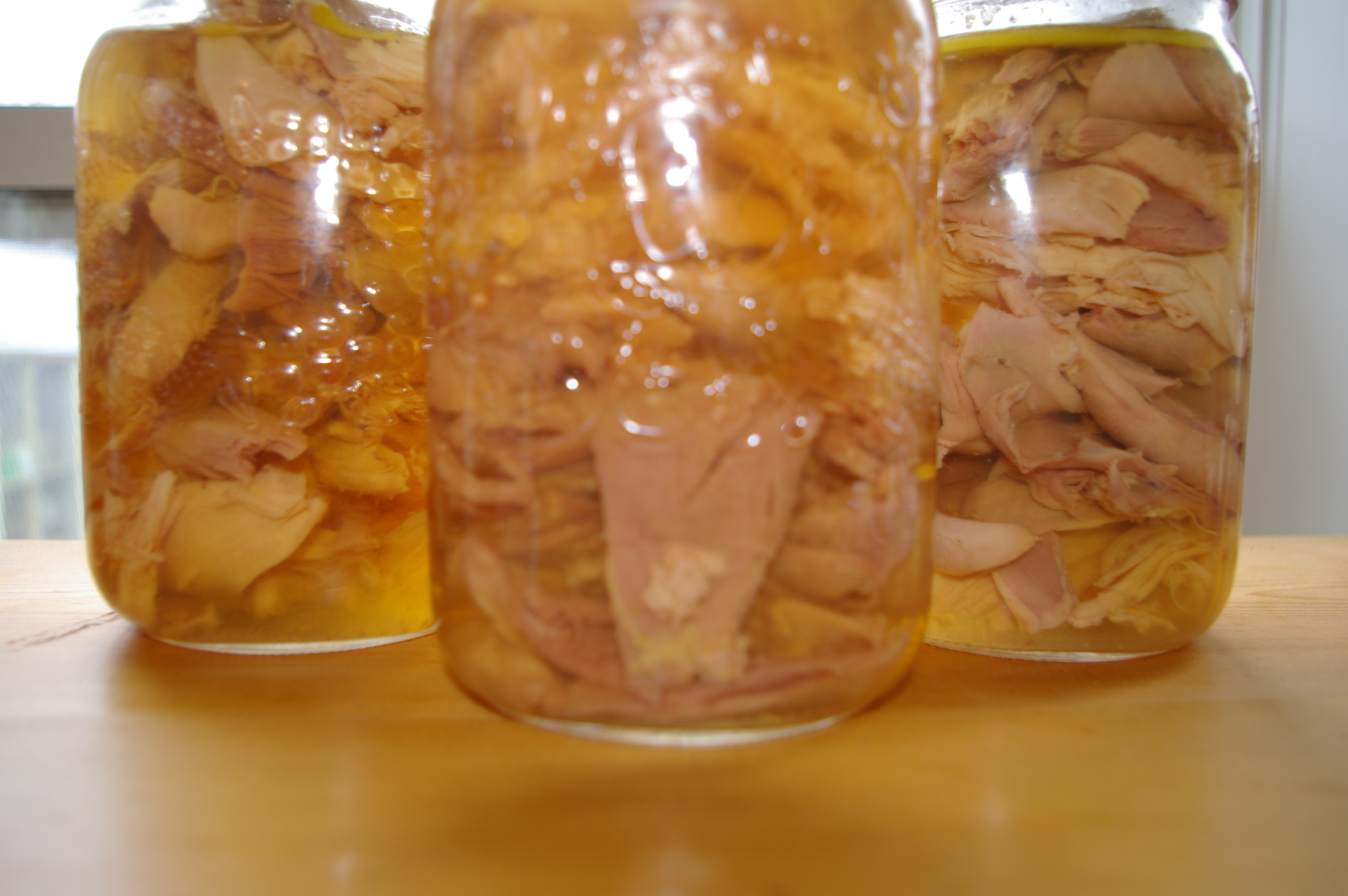
When it comes to Acquisition there are many who feel that a year’s supply of appropriate food for their family is a financial burden that can’t be carried, when in fact a little old fashioned ingenuity will prove that the exact opposite is true. I don’t purchase large amounts of chicken and pasta when it goes on sale because I’m some kind of a hoarder, I do so to stabilize my food budget because when I take that $1.50 a pound chicken home and can it, when I take it off of my shelf 5 years from now it STILL will have only cost me $1.50 a pound—no matter what happens on Wall Street. I don’t purchase freeze-dried food because of “food storage” I do it because it’s less expensive, more nutrition, less waste, AND lasts longer. Contrary to the gargantuan efforts you see on TLC’s Extreme Couponing, a modest amount of couponing discipline applied each week—only 2 hours—will yield an enormous amount of results for your food pantry for FREE or at least really, really cheap. When the Acquisition of food is thought to be the barrier, I find that it’s not the expense, but the spending habits that are really getting in the way. Instead of going to the store and purchasing what you want each week, try getting ahead of the game for a couple of weeks then allow yourself to only purchase items that benefit your family that are on sale. If you plan your meals based on what you already have, not only will you find money in your budget that you didn’t know you had, but you’ll also handle a real crisis of living solely off of what you’ve got much better mentally.
With so many “food storage” advertisers selling stuff that barely passes for flavored cardboard—a sin regularly committed by our own grocery stores as well nowadays, providing appropriate nutrition for your family all year round is a legitimate concern. But don’t worry. There are plenty of solutions. Sprouting, freeze-dried produce, and learning to make a lot of your standard items from scratch will take care of that concern in a jiffy, with even better nutrition than you’ll get with the more traditional foods found in the American Standard Diet (SAD). For example, when I do make bread, I make it from whole wheat and honey along with other standard ingredients—standard, of course being a relative term. But the point is, I am not making it with the need to have it last for nearly a month on the shelves of the store, thus no nasty preservatives or other ingredients. (Believe it or not, quality grain bread is very simple to make. Just check out my “Kick-Butt Bread Recipe. You’ll never fail.) I make it a point to be knowledgeable of the source of each of my ingredients, including the growing conditions and time of harvest.
Continuing on, by canning my own meats, butter, and fish, I also can feel confident about nutritional content, and more importantly, I’m comforted in knowing what’s NOT in my food. There’s also a world of opportunities out there to create delicious dishes with less mainstream ingredients and without the standard hormones, anti-biotics, etc. such as making “wheat meat” aka seitan from vital wheat gluten or adding beans to baked goods such as cookies and brownies, or adding sprouts to casseroles and soups. I personally love my pumpkin and black bean soup recipe. By the way, there’s also a great book out called “Deceptively Delicious: Simple Secrets to Get Your Kid Eating Good Food” by Jessica Seinfeld. (I might add that it helps with husbands too.) I’ve found it very helpful in increasing the nutritional value of many dishes. By educating myself on what’s real nutrition (coconut oil, for example) and what’s harmful for my family (canola oil, for example), then I can provide better nutrition for them than they can get in any restaurant all year round. None of these strategies require extensive time in our busy lives. With the development and availability of so many wonderful tools, it hardly takes anymore time to make bread or homemade pizza than it does to go and pick it up. Once again, we come to the conclusion that meeting the demands of the aspect isn’t the problem. Our way of thinking about it and addressing it usually is.
Shelf-life can be a bit tricky if you’re accustomed to consuming highly processed foods. Ironically the foods which provide very little nutrition usually end up having a much shorter shelf-life than those we would want long-term—well, except for Twinkies. I understand those babies will last for EVER! Chances are, if you’re stymied by getting a necessary staple food to have a long shelf-life, you’re simply lacking in some easy-peezy tidbits of knowledge that will make extending your shelf-life a snap. Brown rice, nuts, chocolate—you know, those essentials of life—have received an unnecessary bad rap for going bad quickly, when in fact it’s all in how such items are stored. Cool, dry, dark, and void of oxygen is all that’s necessary for keeping such items palatable for nearly a decade. And if you’re only bringing home foods that your family will enjoy, nothing should be sitting around for 10 years anyway. Rotation, rotation, rotation is one of the easiest fixes to shelf-life concerns. Come on. Even the military rotates their MRE’s. If you’ve acquired any of those “30 year foods” that you’ll only eat if you “had to” then in my opinion you’re preparing to be miserable. If you want your shelf-life problems to go away, then I suggest you stop purchasing items you have no desire to consume now. Otherwise, there are several articles on here which address the proper preservation of foods such as the use of the FoodSaver combined with Mason jars, canning, oxygen absorbers, waxing cheese, bottling butter, preserving eggs with mineral oil, etc. which will help you establish a food pantry of real foods for you and your family, not cardboard which is supposed to taste like fettuccine alfredo.
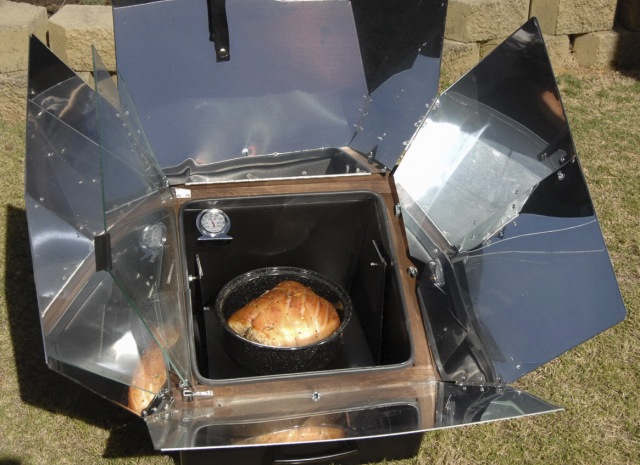
Lastly I’m going to address the preparation of our foods. Obviously, most folks are competent with the stove, oven, toaster oven, microwave, etc. but will we still be able to prepare our family’s favorite dishes with no traditional power sources? Dutch ovens, solar ovens, pressure cookers, rocket stoves, small Korean cook stoves with butane, pressure canners—all of these are tools which will make your present way of preparing meals easily replicated in such events. In fact, I dare say that such alternative methods have merit now. For example, I love, love, love my pressure cooker. It’s one of my favorite tools in my house. I can make great beans in minutes, not hours; perfect rice or risotto in under 10 minutes; and even a tender and juicy pot roast from zero to perfect in less than an hour. Solar ovens allow you to cook anything you can cook in your inside oven with the kiss of the sun and without having to pay to cool off the house after you’ve done so. I love the taste of any frozen meat I cook in it without any seasonings! It’s delightful! The great news is you won’t have to envision a life of cooking in an open fire pit while you endure a crisis. I think that’s the last thing anyone needs under such circumstances, don’t you?
One last bit of advice I’d like to share as a part of this Principle. We are emotional eaters to some extent or another. Some folks have their breaking point sooner than others, but the fact of the matter is, we have a very emotional relationship with food. It’s emotionally trying to even imagine enduring a shortage of food for ourselves, let alone watching our children suffer for a want of food. Keeping in mind the emotional aspect that we have at present; understand that if you are ever required to endure a more trying time such as a financial collapse, massive power outage, earthquake, etc. you will be even more emotionally in need of the foods which are familiar and comforting to you and your family. As such, it’s imperative that you plan for such dishes. In fact, I believe that everything you plan on feeding your family under such circumstances should already be familiar and acceptable to them. I usually put it this way: Be sure that you have found a way to make your spouse’s and children’s favorite meal that they would want you to make on their birthday. Doing so will put you so much further ahead mentally and emotionally in your efforts to thrive in whatever circumstances get thrown at you.
Applying all of these strategies to your Food Preparedness will definitely result in you experiencing the peace in your preparedness efforts which I continually discuss. I assure you, peace is a significantly better way (and a less expensive one) to prepare for whatever may come along than a panicked one.